
By Sunoxi Solar | Darwin’s locally owned solar and electrical contractor since 2012 | (08) 8257 9146
Darwin is one of the best places in Australia to go solar. With over 3,000 hours of sunshine annually and electricity bills that regularly hit $500–$700 per quarter, the NT case for solar is stronger than almost anywhere else in the country. Sunoxi has installed more than 3,500 solar systems across Darwin, Palmerston and regional NT since 2012 — here’s everything you need to know before you buy.
By Sunoxi Solar | Darwin’s locally owned solar and electrical contractor
How much do solar panels cost in Darwin in 2025?
A quality 6.6kW solar system in Darwin costs between $9,300 and $10,200 installed after the federal STC rebate (March 2026 figures from Solar Choice’s Price Index). This includes GST and the upfront small-scale technology certificate (STC) discount applied by your installer.
Typical price ranges by system size in Darwin:
System size | Installed cost (after STCs) | Typical daily output |
5kW | $7,400 – $8,500 | 23–25 kWh/day |
6.6kW | $9,300 – $10,200 | 30–33 kWh/day |
10kW | $14,500 – $16,500 | 47 kWh/day |
13kW | $18,000 – $21,000 | 61 kWh/day |
Prices vary based on roof type, storey height, switchboard condition and panel/inverter brand. A two-storey home or a tile roof typically adds $500–$1,500 to installation cost compared to a single-storey tin roof.
What solar rebates are available in Darwin and the NT?
Federal STC rebate (available to everyone)
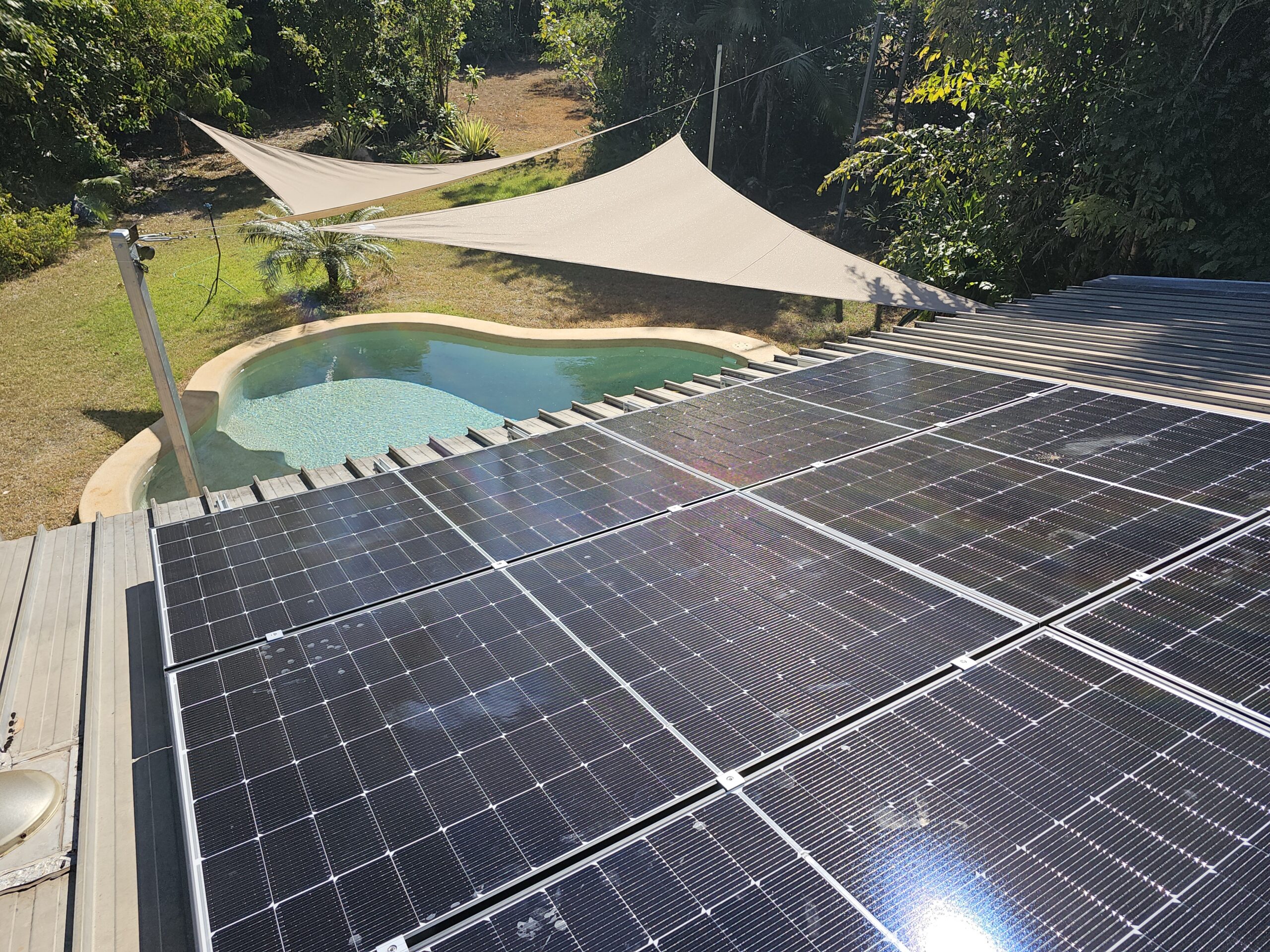
The main solar rebate is the federal Small-scale Technology Certificate (STC) scheme, which reduces your upfront system cost by approximately 30–35%. Your installer claims this on your behalf — you simply pay the lower price. For a 6.6kW system in Darwin’s solar zone, the rebate is worth around $3,300–$3,700 at current STC prices (~$37–$39 per certificate).
The STC rebate steps down by one deeming year every January 1 until it ends in 2030, so the sooner you install, the larger the rebate.
Federal Better Home Battery Booster (new in 2025)
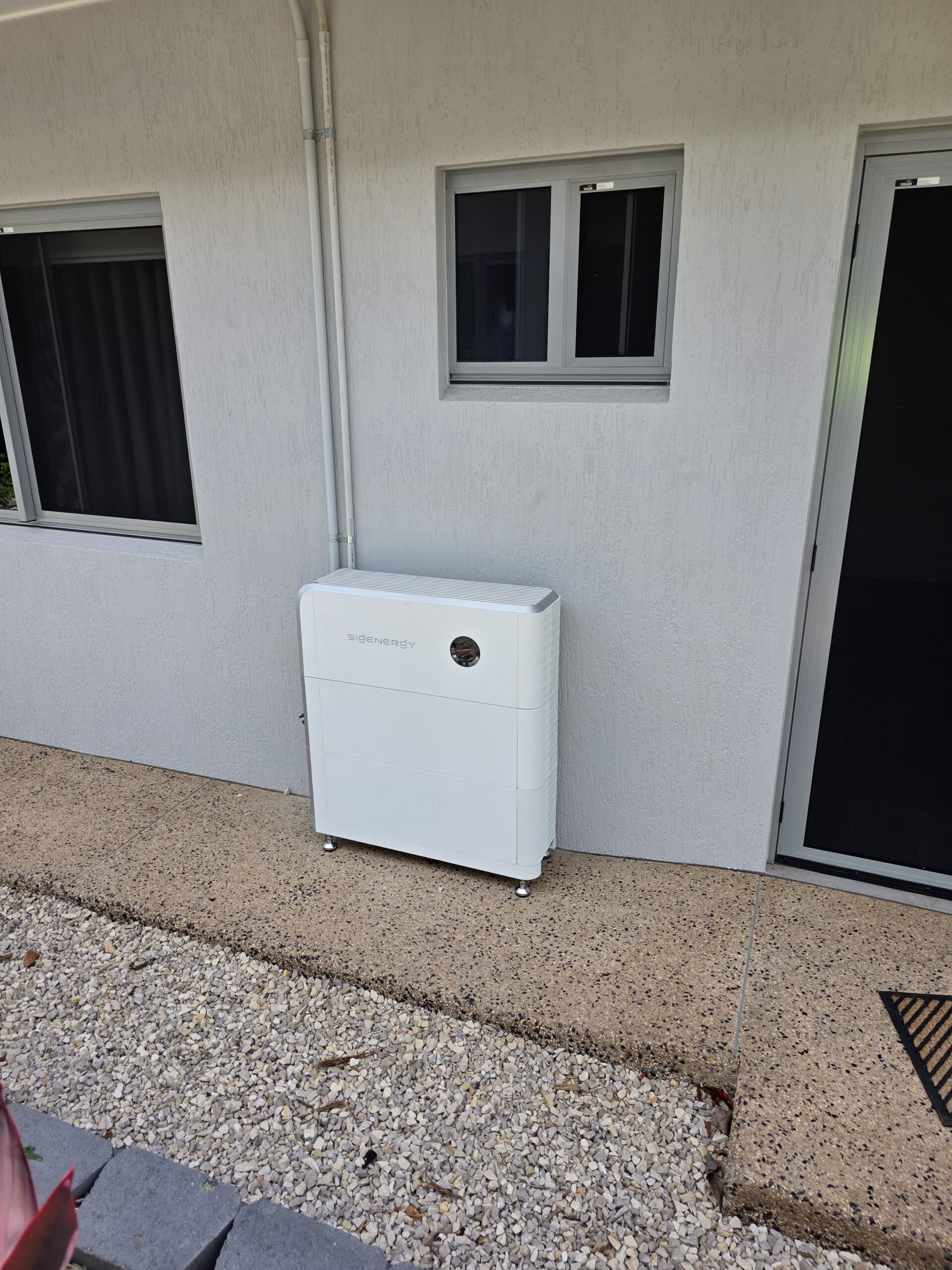
The Federal Government launched a battery rebate in 2025 that provides up to 30% off the cost of an eligible home battery. This applies to batteries installed on or after 1 July 2025. The rebate is means-tested and available to households with a combined income under $210,000. Eligible batteries include the Tesla Powerwall, Sigenergy SigenStor, BYD Battery-Box, and others on the approved list. Sunoxi can advise which batteries qualify and help you access this discount
What is the solar feed-in tariff in Darwin?
Jacana Energy pays two solar feed-in tariff (FiT) rates to eligible customers in the NT:
- Anytime FiT: 9.33 cents/kWh — paid for all solar exported to the grid outside the Super FiT window
- Super FiT: 18.66 cents/kWh — paid for solar exported between 3pm and 9pm daily, effective from 1 July 2025
The Super FiT is available to residential and business customers with a solar system under 30kVA, annual consumption under 750 MWh, and a smart (electronic interval) meter. If you have an older mechanical meter, you only receive the Anytime FiT of 9.33c/kWh.
Important: Jacana’s usage rate is approximately 30.08 cents/kWh for the first 45 kWh per day and 35.01 cents/kWh above that. Because you save more by using solar power directly than by exporting it, system sizing should match your daytime consumption — not simply maximise panel count.
How much power does solar generate in Darwin?
Darwin receives an average of 5.9 peak sun hours per day across the year, making it one of the highest-producing solar locations in Australia. In the dry season (May–October), daily peak sun hours reach 8–10 hours.
Expected annual output by system size:
System size | Annual output (kWh) |
5kW | ~8,500 kWh |
6.6kW | ~11,200 kWh |
10kW | ~17,000 kWh |
13kW | ~22,000 kWh |
The wet season (November–April) brings cloud cover that reduces output by 20–30% compared to the dry season, but Darwin’s year-round sunshine still delivers excellent annual totals.
What size solar system do I need for my Darwin home?
The right system size depends on your electricity consumption and when you use power.
- Small home (1–2 people), bill $200–$300/quarter: A 5kW system is usually sufficient
- Average Darwin home (3–4 people), bill $350–$500/quarter: A 6.6kW–10kW system is the most common choice
- Large home or home with pool, bill $500–$800/quarter: 10kW–13kW systems deliver the best return
- Adding a battery: Size your solar system 20–30% larger than your daytime-only consumption to ensure you can charge a battery and still export during the Super FiT window
Sunoxi analyses your actual Jacana bill and usage profile before recommending a system size. A system that is too large relative to your daytime consumption generates credits at only 9.33c/kWh rather than savings at 30c/kWh — so correct sizing matters significantly for your payback period.
How long does it take for solar to pay back in Darwin?
Based on current Jacana Energy electricity rates and STC pricing:
System size | Installed cost | Annual savings (est.) | Payback period |
5kW | ~$7,480 | ~$1,500 | ~4.9 years |
6.6kW | ~$9,850 | ~$2,000 | ~4.9 years |
10kW | ~$14,960 | ~$3,000 | ~4.9 years |
A well-sized solar system in Darwin is one of the fastest-payback investments available, delivering an effective return of approximately 15–20% annually over a 25-year panel warranty period. One Sunoxi customer in Darwin reduced their quarterly bill from over $700 to $26 following installation.
What panel orientation is best for Darwin solar?
Because Darwin sits in the tropics, the sun crosses both north and south of the zenith across the year — unlike southern Australia where the sun is always to the north.
- Best tilt angle for Darwin: 5–15 degrees (near-flat). A near-flat angle balances generation across the wet and dry seasons, capturing the sun when it’s to the south in wet season and to the north in dry season.
- Avoid steep north-facing tilts common in southern Australian systems — these underperform significantly in Darwin’s tropical conditions.
- East and west orientation can also work well for households that use power morning and afternoon rather than midday.
Does Darwin’s climate affect solar panel performance?
Yes — Darwin’s climate creates specific performance and installation considerations that interstate installers often don’t understand.
Heat: Solar panels lose efficiency in extreme heat (approximately 0.3–0.45% per degree above 25°C). Darwin’s roof temperatures in the wet season can reach 60–70°C, so panels with a low temperature coefficient perform better. Sunoxi specifies panels with a temperature coefficient of -0.35%/°C or better for Darwin installations.
Humidity: High humidity accelerates corrosion on electrical connectors and junction boxes. Sunoxi uses IP67 or IP68-rated connectors and junction boxes on all installations as standard, not just on premium systems.
Cyclones: Darwin sits in a C4 cyclone wind region. All Sunoxi solar installations use cyclone-rated racking and fixings compliant with the relevant Australian Standards for wind loading in the NT. Building permits may be required for certain roof types and system sizes — Sunoxi manages this process on your behalf.
Termites: Cable management in Darwin must account for termite activity. Sunoxi uses conduit and appropriate sealing on all roof penetrations to prevent termite ingress into roof cavities.
Are solar batteries worth it in Darwin?
A solar battery extends your self-consumption and provides backup during grid outages. With the introduction of Jacana’s Super FiT at 18.66c/kWh (3pm–9pm), batteries in Darwin now have a useful third function: charging from solar during the day and discharging during the evening peak when the grid rate is highest.
Battery payback in Darwin: Standalone battery payback periods are typically 8–12 years depending on usage profile, battery size and whether you access the Federal Battery Booster rebate.
Batteries make strong financial sense if:
- Your household has high evening electricity consumption (air conditioning, cooking, pool heating)
- You want protection from grid outages (common in remote/rural NT)
- You are installing solar for the first time (solar + battery package pricing is more cost-effective than solar then battery separately)
- You can access the Federal Battery Booster rebate (up to 30% off)
Common battery options Sunoxi installs in Darwin:
- Tesla Powerwall 3 – 13.5kWh, fully integrated with solar inverter, excellent cyclone-zone credentials
- Sigenergy SigenStor – 15–16kWh modular system, stackable capacity, strong thermal management for Darwin heat
- BYD Battery-Box Premium HVS – modular lithium iron phosphate chemistry, proven reliability in tropical climates
- Fronius Symo GEN24 + BYD – DC-coupled system with excellent monitoring and energy management features
Sunoxi is an authorised installer of all of the above battery systems. We carry stock of key components in Darwin rather than relying on interstate freight, which means faster installations and quicker warranty resolution.
What happens to my solar during a Darwin wet season?
The wet season runs from approximately November to April. During this period:
- Output drops by 20–30% due to increased cloud cover and afternoon storm activity
- Most wet season days still generate significant solar — overcast conditions typically still produce 40–60% of clear-sky output
- Monitoring is important — Sunoxi’s installations include cloud-based monitoring so you can track performance through the wet season and identify any faults quickly
- Panel cleaning is recommended once per year, ideally at the end of the wet season when dust, bird droppings and storm debris accumulate
What do I need to know about Power and Water Corporation solar connection in Darwin?
All grid-connected solar systems in Darwin must be approved by Power and Water Corporation (PWC) as the distribution network operator. Key points:
- Systems are typically limited to 5kVA per phase for export (single-phase homes: 5kW export limit; three-phase homes: up to 15kW export limit)
- Larger systems above these limits are export-limited by the inverter — they still generate and self-consume, but excess is curtailed rather than exported
- PWC connection typically takes 4–8 weeks from application to approval — Sunoxi lodges this on your behalf as part of every installation
- A smart meter (electronic interval meter) is required to access the Jacana Super FiT of 18.66c/kWh. If you don’t already have one, Jacana arranges this separately after your system is installed
What should I look for when choosing a solar installer in Darwin?
Darwin’s solar market has a mix of local installers and interstate companies who fly crews in for installations. Here is what to look for:
- CEC accreditation: Your installer must hold Clean Energy Council (CEC) accreditation. All Sunoxi electricians are CEC accredited.
- Local presence: An interstate installer who flies in for the job will not be there for warranty claims, system issues or inverter replacements. Sunoxi has been based in Darwin since 2012 and maintains a permanent local team.
- NT-specific experience: Has the installer dealt with Power and Water connection approvals, NT cyclone-rated racking, Darwin roof types (primarily corrugated steel) and the humidity-related maintenance issues specific to the Top End?
- Workmanship warranty: Sunoxi provides a 5-year workmanship warranty on all installations. Panel manufacturers typically warrant 25 years performance; inverter manufacturers typically warrant 10 years.
- Electrical licence: Solar installation in the NT requires a licensed electrical contractor. Sunoxi holds an NT electrical contractor licence and carries full public liability and professional indemnity insurance.
Can I get solar on a Power and Water (remote community) connection?
Yes — Sunoxi has experience with Power and Water solar PV programs for properties on remote and rural NT connections, including properties connected to microgrids and standalone power systems (SAPS). These installations have different requirements to urban Darwin grid connections and require specific design approval from PWC. Contact Sunoxi to discuss remote and off-grid options.
How do I get a solar quote from Sunoxi in Darwin?
Sunoxi provides free site assessments and system design proposals for Darwin and surrounding areas. To get an accurate quote we need:
- A copy of your most recent Jacana Energy electricity bill (to assess your consumption and tariff)
- Your address (for Google Earth roof assessment and orientation analysis)
- Your preferred system size or budget range (we can also recommend based on your bill)
Call (08) 8257 9146, email admin@sunoxi.com.au, or use the contact form at sunoxi.com.au.
Sunoxi is located at 10/111 Coonawarra Road, Winnellie NT 0820.
About Sunoxi Solar Darwin
Sunoxi is Darwin’s longest-established local solar and electrical contractor, founded in 2012 as Country Solar NT (Telstra Territory Business of the Year 2015). We have installed over 3,500 solar systems and more than 30MW of solar capacity across the NT, including residential, commercial, industrial and off-grid projects. Our team includes accredited electricians, solar designers and project managers — all based permanently in Darwin.
We design every system to NT-specific conditions: cyclone-rated racking, humidity-tolerant components, correct tropical panel orientation and Power and Water connection compliance. We don’t fly in from interstate — we’re here, and we’ll be here when you need us after installation.
Last updated: June 2026. Pricing and rebate information is updated regularly. Contact Sunoxi for current figures.
Sources: Solar Choice Price Index March 2026, Jacana Energy feed-in tariff schedule 2025/26, Clean Energy Regulator STC pricing.